The CNS is made up of the brain and spinal cord. The brain generates and receives signals that control your body. The spinal cord carries these signals up and down the midline of your body.
The Peripheral Nervous System (PNS) carries signals to and from the spinal cord. It connects various organs and muscles with the CNS.
Communication in the CNS
Signaling in the brain and spinal cord is carried out by specialized cells called neurons. Neurons have long projections called axons, which reach out and make contact with another neuron. In this way, a signal can travel from neuron to neuron throughout you brain, spinal cord and peripheral nerves. To increase the speed of these signals, axons are insulated by myelin – a fatty structure produced by cells called oligodendrocytes (in the CNS) and Schwann cells in the PNS. Loss of myelin due to trauma/disease causes dysfunction in signaling.
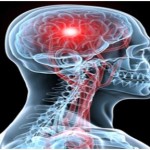
The brain is a complex structure that is divided into two sides (hemispheres). The left hemisphere controls the right side of the body and the right hemisphere controls the left side of the body. It is organized into regions that control and interpret various aspects of our lives. The front of the brain is referred to as the frontal lobe. Here you will find the areas that control motor function, speech and smell. Just behind the frontal lobe is the parietal lobe. In this area of the brain you will find areas responsible for your body’s sensory function (touch, temperature, pain etc.). The temporal lobes are located at the sides of the brain. In these regions, you will find areas responsible for hearing, emotions and language. The occipital lobe is located at the back of the brain and is mainly responsible for vision. Just below the brain is a structure called the cerebellum. The cerebellum is responsible for posture, balance and coordination. The area that links the brain and spinal cord is called the brain stem. The brainstem is responsible for vital life functions such as breathing, heart rate and blood pressure.
 The spinal cordextends down from the brain and carries signals for movement, sensory information (touch, temperature, pain etc.) and involuntary messages to control your internal organs. These signals can travel in both directions. For example, to control a muscle in your body, the message starts in your brain, travels down the spinal cord where it exits and continues along a peripheral nerve to the muscle. Alternatively, when you detect a warm surface with your hand, the sensation travels from your hand along a peripheral nerve to the spinal cord, where it enters and continues up the spinal cord to the brain for processing.
The human spinal cord is a cylindrical structure approximately the width of and adult index finger. It is surrounded by multiple boney structures, called vertebra (plural = vertebrae). Collectively, they make up the vertebral column or spine. There are 7 vertebrae in your neck (cervical), 12 in your mid-section (thoracic) and 5 in your lower back (lumbar).